
 Haoru UWB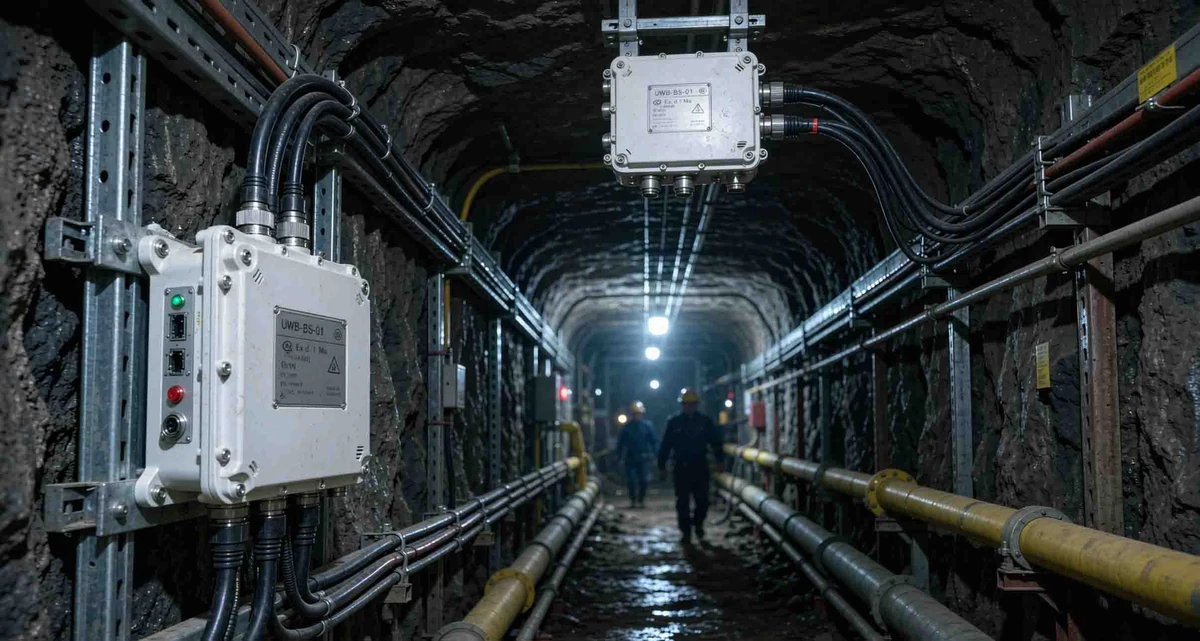
Project requirements
The described underground application faces absent satellite reception, narrow and branching tunnels, metal equipment and multipath. Emergency events may also interrupt power or networking, making retained recent position data important. Existing room- or zone-level tracking may be insufficient for the project's desired location resolution.
Solution
The project description proposes a UWB personnel positioning system tailored to underground operating conditions.
The described design places intrinsically safe anchors at tunnels, junctions, working faces and refuge locations, with tags on lamps or helmets. The case states that its equipment holds the applicable coal-mine certification; confirm the exact certificate and installation requirements before use.
A local platform provides position display, history, geofences, SOS and attendance. Underground edge computation is proposed so a disconnected surface link does not immediately stop local processing.
Retaining the Latest Position Before an IncidentThe proposal combines position updates above 10 per second with local storage at tags/anchors and nearby-device relay. It aims to retain the last fractions of a second of position and motion information for later retrieval with a portable terminal. Storage, power-loss behavior and achieved accuracy must be confirmed for the implemented system.
Interfaces to mine monitoring, announcements and personnel management support coordinated incident workflows.
The case description reports results in accuracy, response and routine management:
Positioning AccuracyReported static error is within 30cm and dynamic error within 50cm in the described environment, compared with a referenced 3–10m RFID/Wi-Fi baseline.
Emergency ResponseReported incident-location time decreased from over thirty minutes to under five minutes, approximately 85%, and the search area by approximately 70% using retained recent positions.
Routine ManagementThe case reports automated attendance and a reduction in manual roll-call time from fifteen minutes to zero, with approximately 90% fewer unauthorized entries into monitored hazardous areas.