
 Haoru UWB
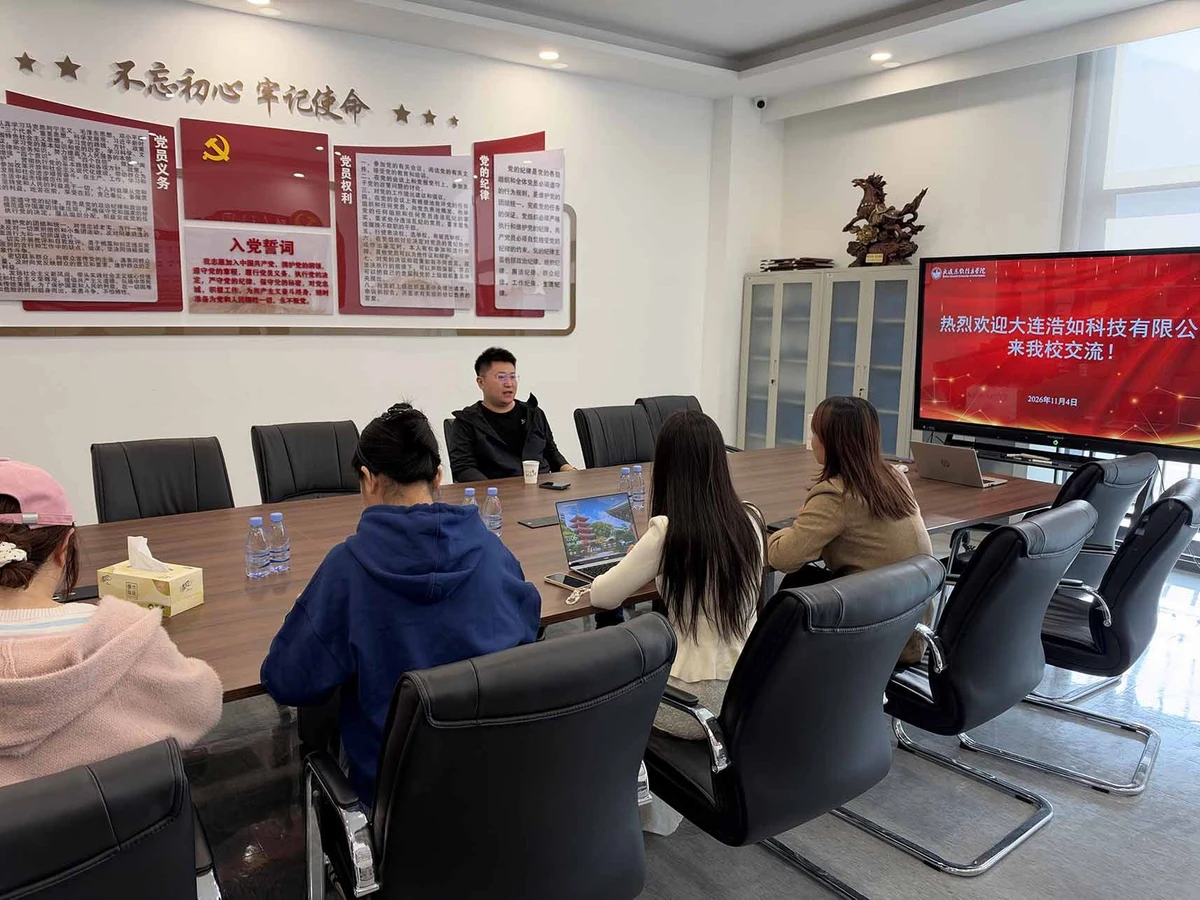
Summary: On November 4, Haoru Technology visited the School of Information and Business Management at Dalian Neusoft University of Information. The two sides discussed talent development for operations roles, practical work with live business accounts, company mentors’ participation in teaching, and pathways to internships and employment. They explored ways to connect classroom learning with workplace experience through real business activities.
On November 4, Haoru Technology visited the School of Information and Business Management at Dalian Neusoft University of Information for discussions on operational staffing needs and student projects. The two sides explored ways to bring real business activities into teaching, helping students gain experience and develop workplace skills through practical assignments.
Aligning Talent Development with Business Needs
During the meeting, Haoru Technology introduced its business activities and recruitment needs. As platform rules, traffic patterns, and content formats continue to evolve, operations roles increasingly require a combination of data interpretation, content planning, campaign execution, and conversion analysis skills.
From the company’s perspective, talent development needs to connect with actual business processes. Students should have opportunities to understand the specific requirements of platform operations and learn to analyze problems, make decisions, review results, and identify improvements through real assignments.
The school introduced its e-commerce program, curriculum, and practical teaching arrangements. By incorporating business projects into courses such as Integrated E-commerce Operations Training and New Media Marketing Practice, and drawing on facilities including a livestreaming training studio and a cross-border e-commerce laboratory, the school provides a foundation for students to gain practical operational experience.
Taking company requirements and teaching arrangements into account, the two sides discussed how to design suitable student projects that could be sustained over time.
Connecting Classroom Learning with Live Business Accounts
To put these projects into practice, Haoru Technology proposed giving students access to live store and content accounts, allowing them to undertake specific operational tasks under the joint guidance of company mentors and academic instructors.
These tasks would include content planning and publishing, campaign registration and advertising, customer service and sales coordination, operational data analysis, and performance reviews. Students would experience a complete operational cycle, from planning and execution to evaluating results.
Working with live accounts would require students to address actual platform rules, campaign schedules, inventory constraints, and fulfillment requirements. They would also encounter real traffic, orders, and after-sales situations. Project assessment would incorporate operational indicators such as impressions, conversions, and purchases, creating a more direct connection between learning outcomes and workplace requirements.
Through this arrangement, the company could receive content creation and operational support, while students could build portfolios and gain project experience. The two sides also clarified account access permissions, data security requirements, the scope of student activities, and the allocation of responsibilities, laying the groundwork for subsequent practical work.
Developing a Collaboration Base and Pathways to Internships and Employment
The two sides agreed that they would subsequently sign a formal university–industry cooperation agreement, jointly establish a collaboration base, and further define the number of practical positions, mentoring arrangements, and assessment methods for account-based projects.
In teaching, the two sides will work to bring company mentors into the classroom. Practical cases and tools from platform operations will be introduced into courses such as New Media Marketing Practice, E-commerce Livestreaming Operations, and Integrated E-commerce Operations Training, with company mentors and university instructors providing joint guidance.
To connect practical learning with employment opportunities, the two sides will explore pathways linking project work, company internships, and job referrals. Students who perform well in practical projects will receive priority consideration for internships and job referrals.
Through the planned collaboration base, the two sides intend to expand their cooperation gradually from individual accounts and courses to operations across multiple platforms, content creation, and data analysis.
Building on this discussion, Haoru Technology will develop practical projects and mentoring arrangements around its business needs. These efforts will help students gain operational experience through real assignments while developing a pool of talent suited to the company’s roles and future business development.