
 Haoru UWB
Solution
Abstract
For exhibit security in museums and exhibition halls, Haoru Technology builds an exhibition security foundation with UWB positioning. By equipping exhibits with positioning tags, the system tracks exhibit locations in real time and raises an alert immediately when an exhibit is moved, taken off its stand or leaves the monitored area, helping institutions upgrade exhibit security from manual guarding to real-time protection while preserving an open viewing experience.
1. Background
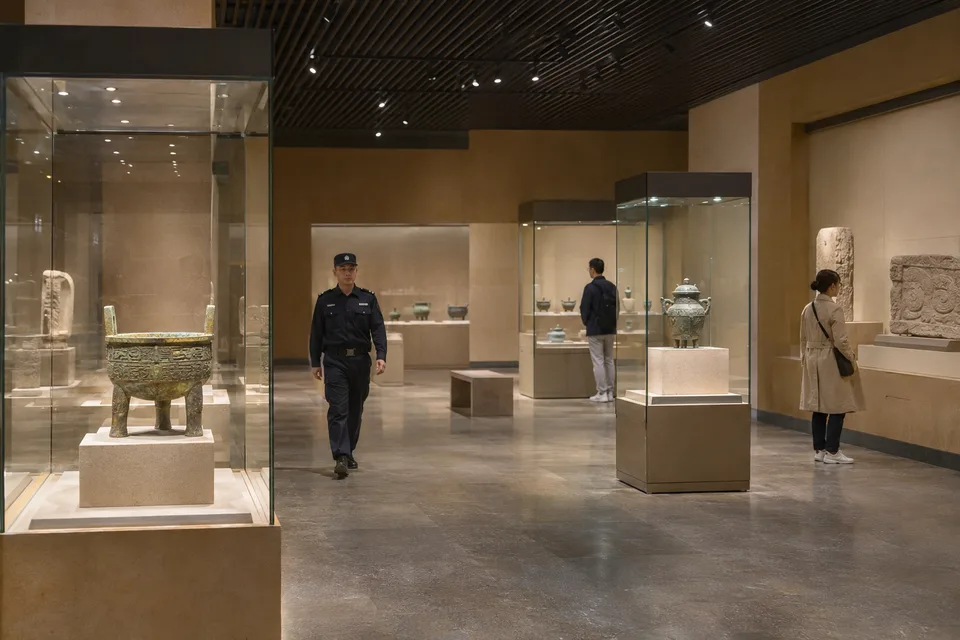
Exhibit security in museums and exhibition halls mainly relies on security patrols, video surveillance and showcase protection. With many exhibits along long display routes, security staff cannot watch every exhibit at once; video surveillance can only be reviewed after the fact and cannot detect an exhibit being moved at the moment it happens. For openly displayed exhibits, how to track their locations in real time without disturbing the viewing experience is a long-standing challenge for institutions.
2. Project Challenges
First, exhibit movement is hard to detect in time. When an openly displayed exhibit is moved, swapped or taken off its stand, manual patrols can hardly notice it promptly, and video surveillance can only trace it after the fact.
Second, long routes and many exhibits. Large venues have long display routes and many exhibits, so security staff cannot cover everything at once, leaving gaps in guarding key exhibits and remote stands.
Third, balancing viewing experience and security. Traditional physical protection may interfere with open viewing, so exhibit security must be maintained while minimizing disruption to the visitor experience.
3. Haoru Technology's Solution
Haoru Technology deploys UWB base stations across exhibition halls, display routes and storage rooms, equips exhibits with positioning tags, and outputs each exhibit's location and status in real time through the host software. The system sets monitored areas for exhibits; when an exhibit is moved, taken off its stand or leaves the monitored area, it raises an alert immediately. When exhibits enter storage or are rotated between exhibitions, their location and status update accordingly. The positioning tags can be installed on exhibit bases or inside stands, without affecting the exhibit's appearance or the viewing experience.
4. How It Works
The positioning tags on exhibits communicate continuously with the base stations deployed in the hall. The base stations aggregate ranging data to the host software, which computes the real-time coordinates of each exhibit. The host software forwards locations and status to the security platform, which compares exhibit positions against monitored-area rules. When an exhibit leaves its original position, exceeds the authorized range, or loses its signal, the platform triggers an alert and marks the corresponding exhibit and location on the electronic map.
5. Solution Advantages
First, real-time protection. Exhibit locations are visible in real time, with instant alerts on movement or removal, turning passive patrol into proactive protection.
Second, unobtrusive deployment. Positioning tags can be installed on exhibit bases or inside stands, without blocking exhibits or affecting viewing, balancing security and experience.
Third, full traceability. Exhibit locations are recorded throughout display, rotation and storage, providing a basis for security management and inventory.
6. Results
The time to detect exhibit movement and removal incidents shortened by 85%, from manual patrol to real-time alerts.
The time security staff spent on patrol and guarding decreased by 50%, with exhibit locations monitored by the system in real time.
The time spent on exhibit inventory and reconciliation decreased by 70%, with locations and status recorded automatically by the system.