
 Haoru UWB
Solution
Summary
Haoru Technology provides ultra-wideband (UWB) performer position data integration to reduce continuous manual followspot corrections as performers move. Wearable tags and stage base stations supply positions that the customer's lighting program converts into fixture aiming. Roles, performance sections and lighting cues govern the linkage, helping teams organize multiple performers, reduce repeated adjustment and retain rehearsal records.
Application Background
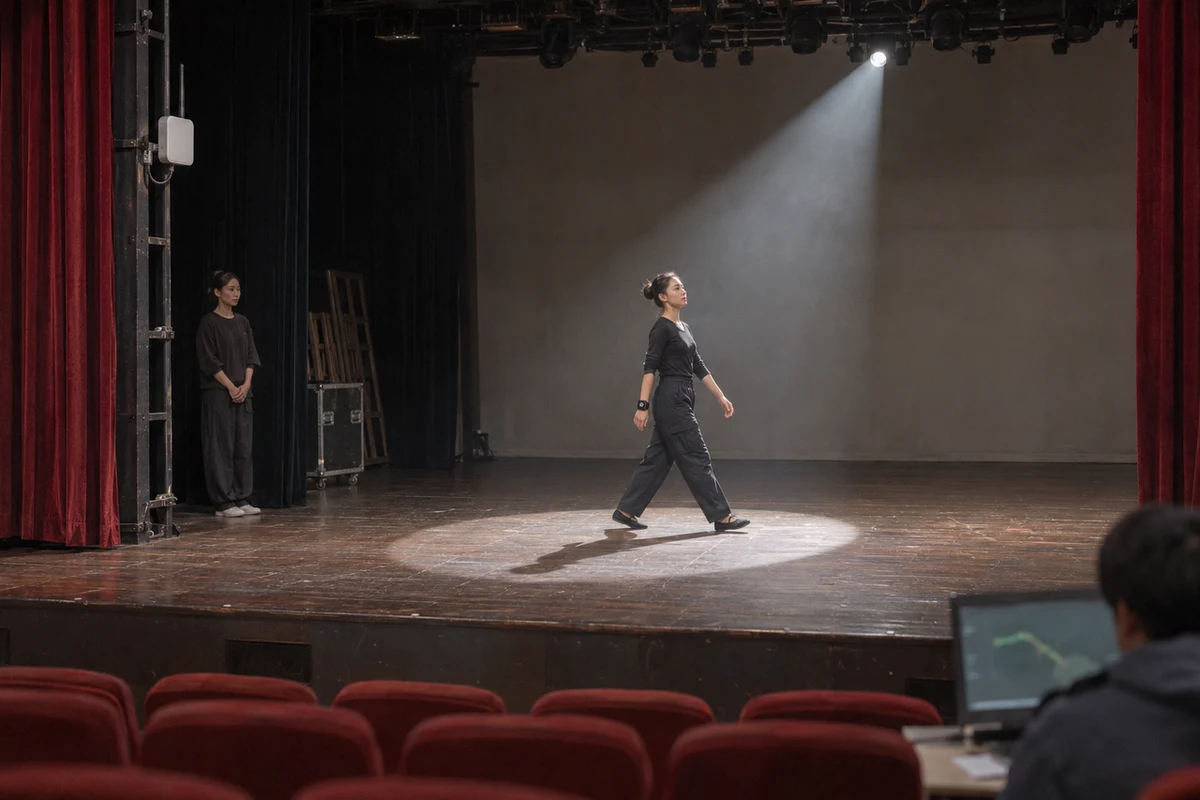
Theatre productions, live events and programs with several roles require followspots to track selected performers. Changes in blocking, crossing paths and last minute program adjustments require lighting staff to identify the target, locate it and apply the lighting requirements of the current section.
The customer already has followspots, a lighting console and a cue planning process. It needs position data to reduce continuous manual corrections and connect rehearsal movements with lighting cues, allowing directors, stage staff and lighting teams to coordinate changes.
Project Challenges
1. Multiple performers require explicit target selection. Tracking must follow the tag assigned to the role and performance section, rather than whichever person is nearest.
2. A tag is offset from the body area to be illuminated. Mounting height, posture and stage steps affect aiming.
3. Fixtures have their own motion limits and responses. Position noise must not cause frequent aiming changes, while cues and manual takeover remain available.
Haoru Technology Solution
Haoru Technology deploys UWB base stations around the defined performance area, equips selected performers with wearable tags, and supplies positions, identities and trajectories. Spatial calibration accounts for steps or elevated performance areas, and deployment checks cover obstruction from costumes, props and stage equipment.
The customer's lighting program associates tags with roles, performance sections and fixtures. It uses fixture coordinates, orientation and offsets to the intended body area to calculate aiming. A project interface converts positions into lighting control inputs. The existing console retains brightness, color, cues and manual takeover.
The linkage program smooths continuous positions and constrains aiming changes according to fixture motion limits and program state. Missing tag data trigger the configured hold, disengagement or manual takeover procedure. Rehearsal records associate movements, cues and exception periods so the team can adjust role switching and followspot coverage.
How It Works
1. Bind roles: associate tags, roles and followspots for the performance so that each fixture has an explicit target.
2. Collect movements: UWB base stations calculate performer positions and output identification and timing information.
3. Calculate aiming: the customer program transforms stage positions into fixture directions, applying body area offsets, motion limits and smoothing rules.
4. Execute and review: the console runs cues with manual takeover retained, while linked movement and control events support rehearsal review.
Solution Advantages
1. Tag identities provide explicit role selection for multiple performers and role changes.
2. Performer positions and lighting scenes have separate responsibilities, retaining the customer's fixtures, console and cue planning.
3. Rehearsal records show movements and cues together, reducing repeated demonstrations based on verbal descriptions.
Final Results
Manual followspot direction corrections during rehearsals decreased by 50%. Position linkage handles continuous movement tracking while staff focus on scene and performance changes.
Time spent reconfiguring followspots after blocking changes decreased by 40%. Retained role, stage zone and fixture relationships reduce repeated setup.
Time spent locating followspot exception segments in rehearsals decreased by 60%. Linked movement, cue and exception timing reduces repeated viewing of entire rehearsal recordings.