
 Haoru UWB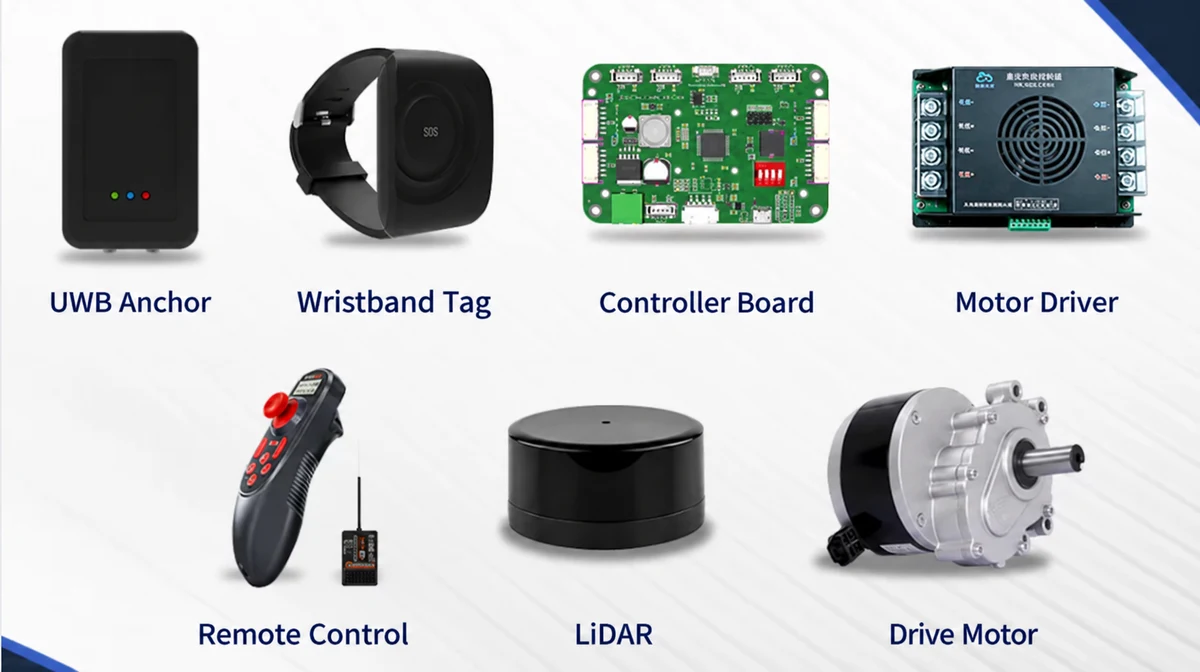
A Haoru omnidirectional following kit can add target following to a compatible vehicle, robot or mobile chassis. A carried tag supplies range and direction through the UWB system, and the controller drives the vehicle accordingly. This article covers components, applications and integration boundaries.
Workers in factories, warehouses and maintenance areas often operate tools while moving material carts. A UWB following kit allows a compatible platform to follow a carried tag, supporting tool carts, material carts and mobile robots. Configuration depends on the chassis and application.
How Does UWB Following Work?
UWB uses ultra-wideband radio signals for range and positioning measurements. The person carries a tag, and vehicle-mounted anchors measure its relative range and horizontal direction. The vehicle controller uses these measurements for driving, steering and stopping.
A front/rear anchor arrangement helps determine which side of the vehicle the target occupies. Turning and subsequent following also depend on steering geometry, motor drive and vehicle tuning.
Configuring the Kit Around an Existing Platform
The following solution can be configured in layers according to the customer's existing vehicle:
- Following Module:For vehicles or robots with an existing controller, supplying target range and direction data.
- Omnidirectional Following Kit:Positioning, tag, following controller, drive and sensing options for converting a compatible chassis.
- Drive Conversion:For a chassis requiring motors, powered wheels, battery or controller.
- Complete Following Vehicle:For customers seeking a vehicle without developing their own chassis.
Kit and vehicle contents differ. Identify the existing chassis, motors, drives, supply and safety components before selecting integration options.
Why Use Two Anchors?
A single-anchor system is simpler, but target positions at the side or rear can affect direction selection.
Front/rear anchors better distinguish target side for routes with changing direction. A suitable chassis can turn in place when the target moves behind it.
Evaluate Following Distance and Accuracy on Site
The current product page gives a following-distance setting of1–15m,with unobstructed-condition distance accuracy of approximately±10cmand angular accuracy of approximately±5°. Performance also depends on tag blockage, mounting, chassis response and environment. Verify the exact configuration with vehicle tests.
Application Examples
The following are candidate applications requiring site-specific configuration:
Factory Tool and Spare-Part Carts
A worker carries the tag while a tool cart follows between stations, equipment and maintenance areas, reducing continuous manual pushing.
Warehouse Picking and Material Supply
A compatible cart follows picking or replenishment staff during order picking, transport and line-supply work.
Mobile Robots and Existing Electric Platforms
Assess following integration according to the controller, drive interfaces and chassis steering capability.
Mobile Workstations and Filming Equipment
Livestreaming carts and workstations can be assessed according to equipment size, payload, speed and operating area.