
 Haoru UWB
UWB Positioning
ULM3 High-Precision UWB Positioning Module
DWM3000 · 40m
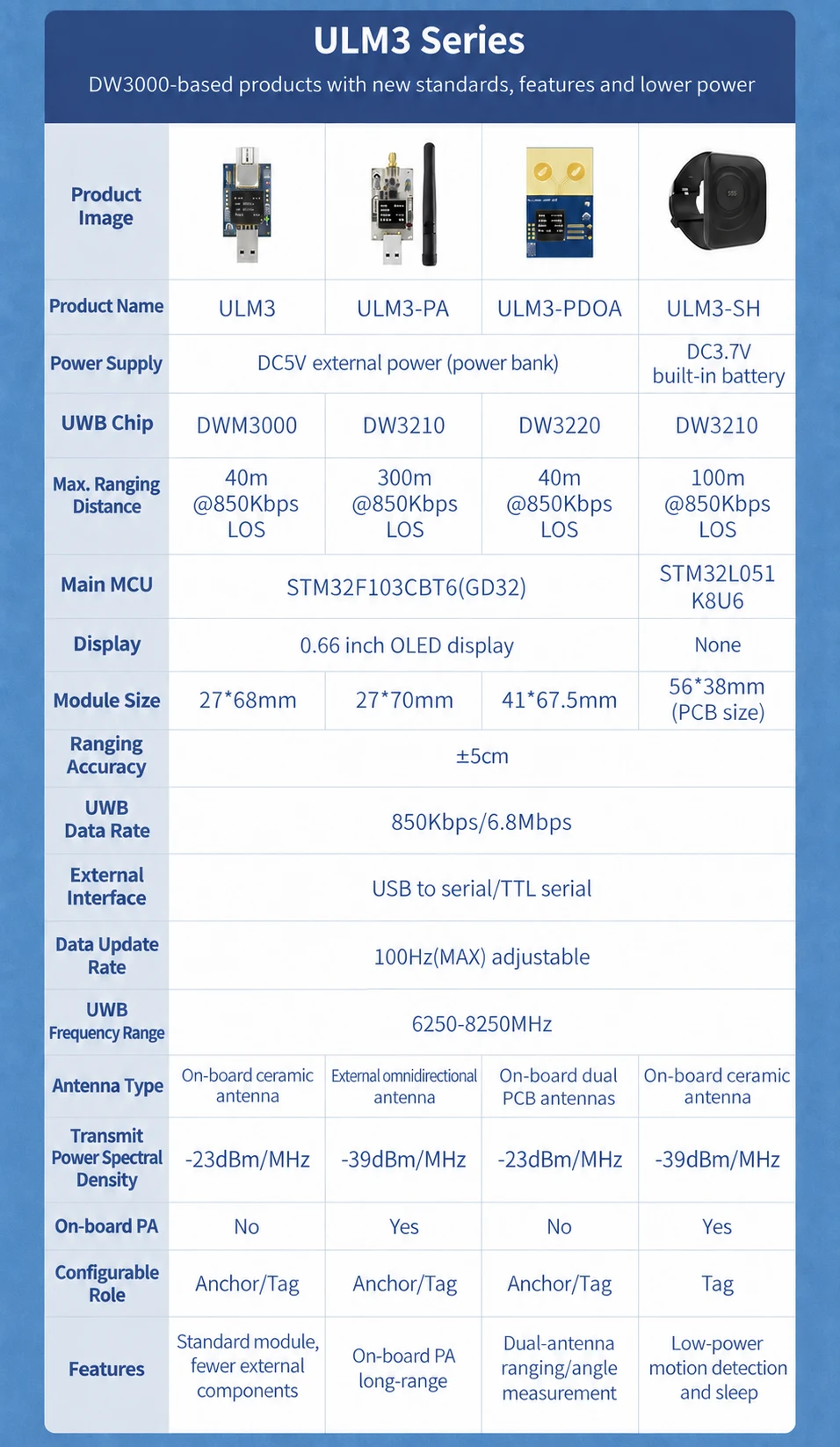
A low-power DWM3000-based UWB module with onboard OLED, stated 10cm positioning accuracy and support for development related to IEEE 802.15.4z. Positioning performance depends on the complete system and installation.

Specifications
Specifications
Key Specifications
- Maximum Ranging Distance
- 40m @ 850Kbps (open-area LOS)
- Ranging Accuracy
- ±5cm
- Update Rate
- Up to 100Hz, adjustable
- UWB Channels
- CH5 / CH9
- Power Supply
- External DC5V, such as a power bank
- Chipset
- DWM3000
- Additional Specifications
- 0.66-inch OLED display; USB-to-UART / TTL UART; minimal peripheral circuitry; onboard ceramic antenna
Overview
Product overview
DWM3000 module for UWB development
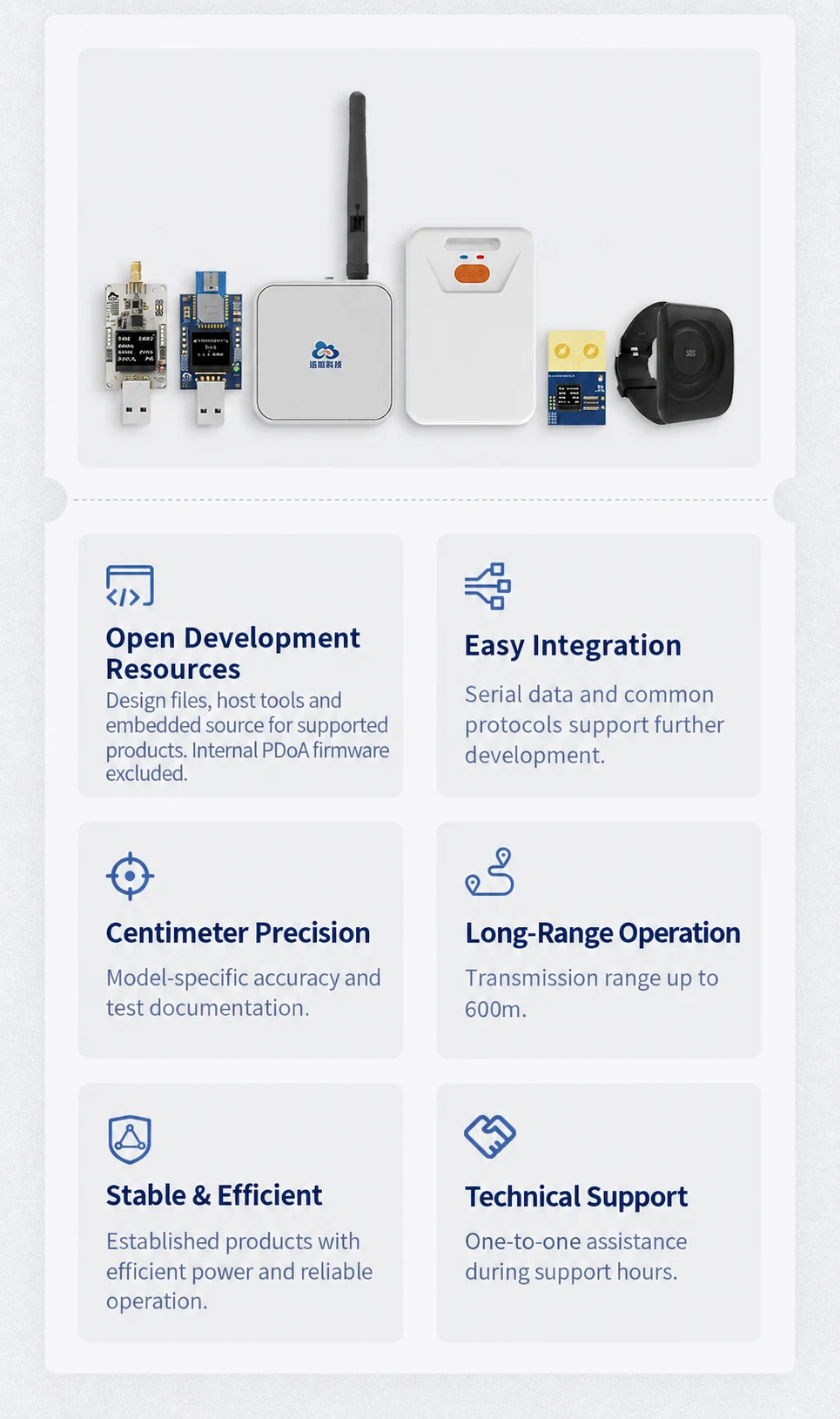
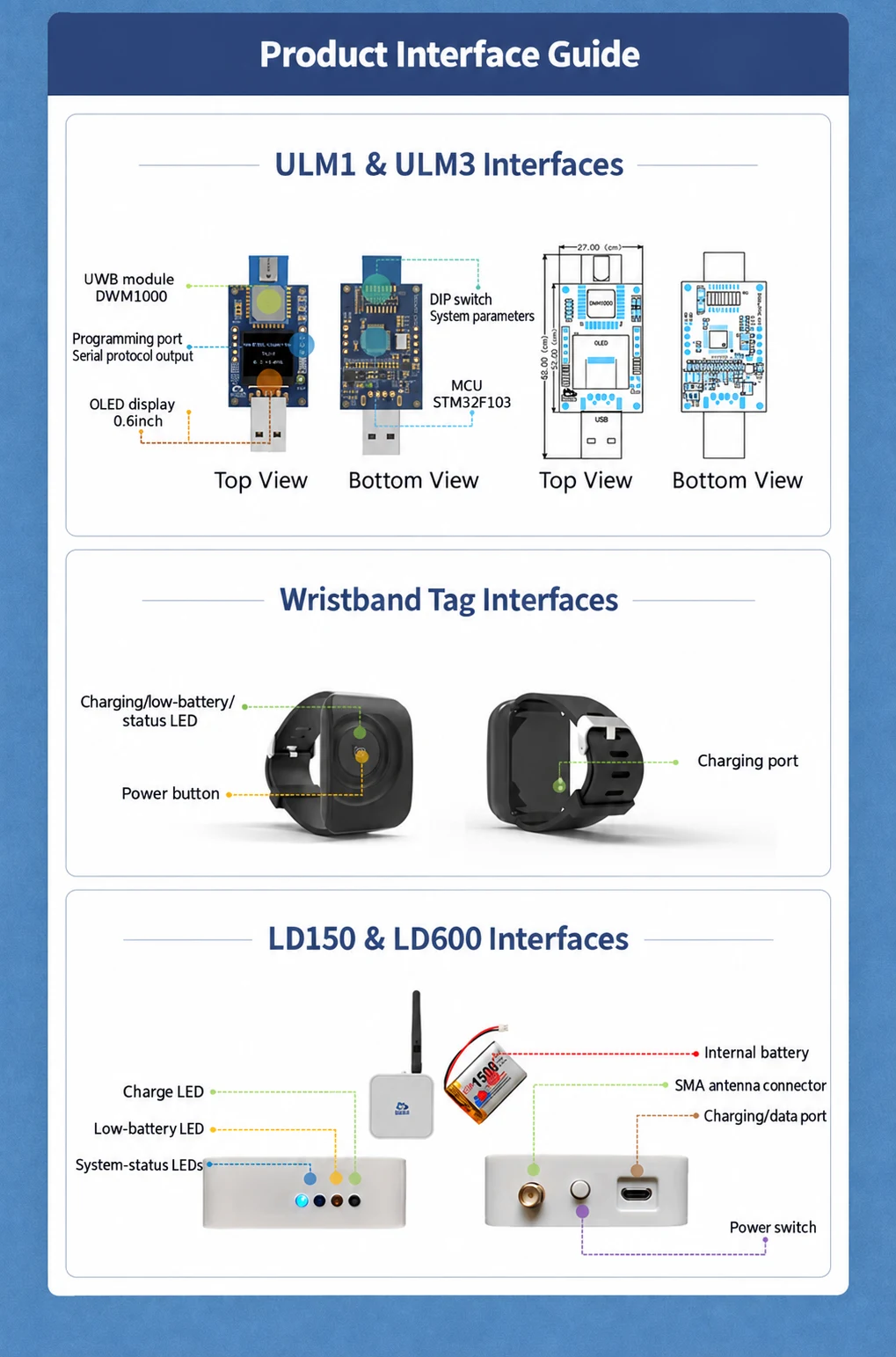
ULM3 uses the DWM3000 UWB module with a controller and onboard OLED display. It can act as an anchor or tag in the documented system. USB-to-serial and TTL UART provide a starting point for connecting a PC or embedded host without treating the radio chip interface as the application's data protocol.
Serial data and operating configuration
The manual specifies 115200 baud with 8 data bits, no parity and 1 stop bit for its serial output. Implement the documented mc frame parser for the installed firmware and verify units, IDs and complete frames before consuming measurements. Check the TTL electrical interface and pinout against the module manual.
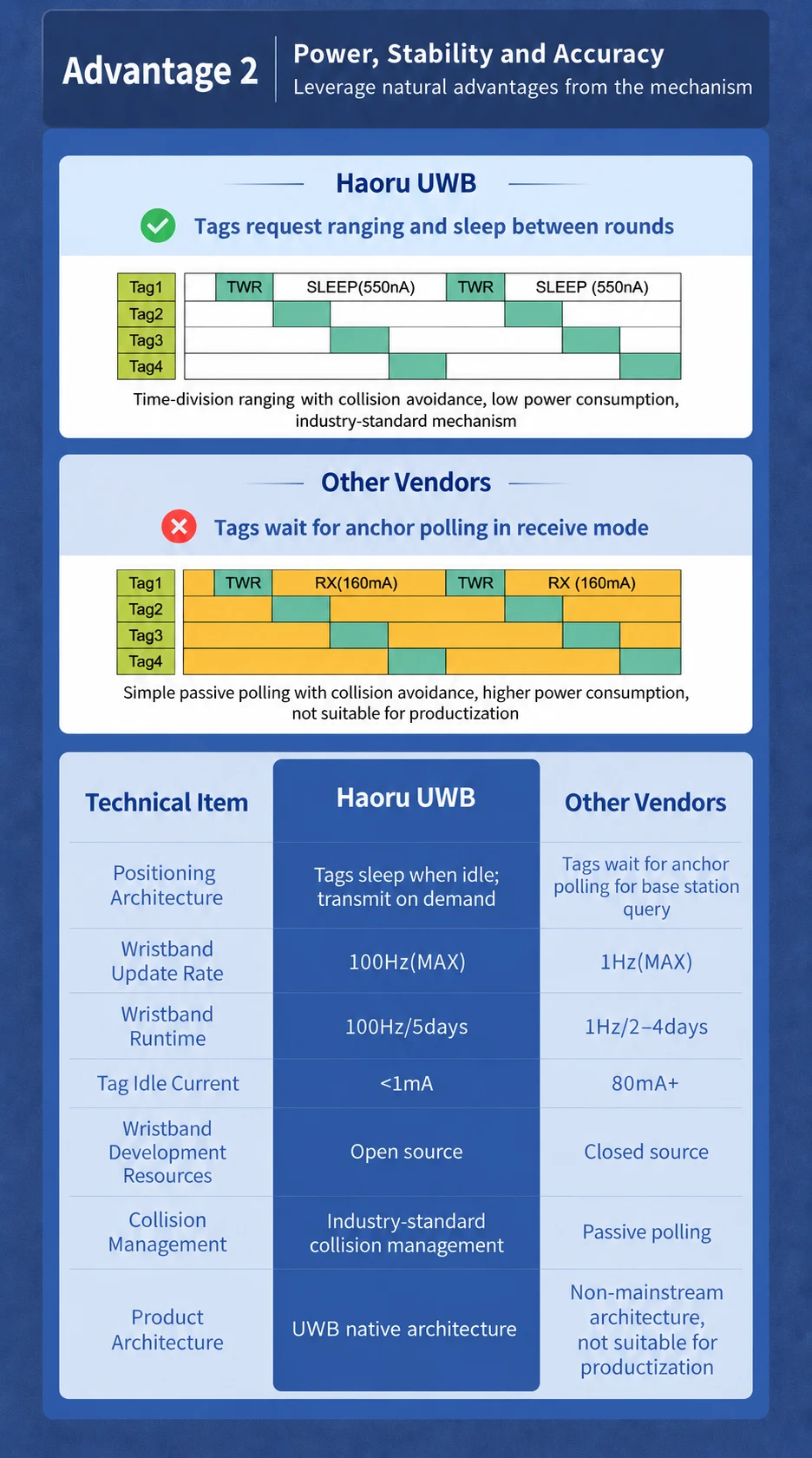
At 850 kbps, the manual describes a 12 ms slot per configured tag and a 96 ms cycle for eight configured tag slots. This operating example is more useful for integration planning than assuming the maximum update rate applies to every tag count. Radio data rate, per-tag update interval and host latency are separate quantities.
Selecting compatible hardware
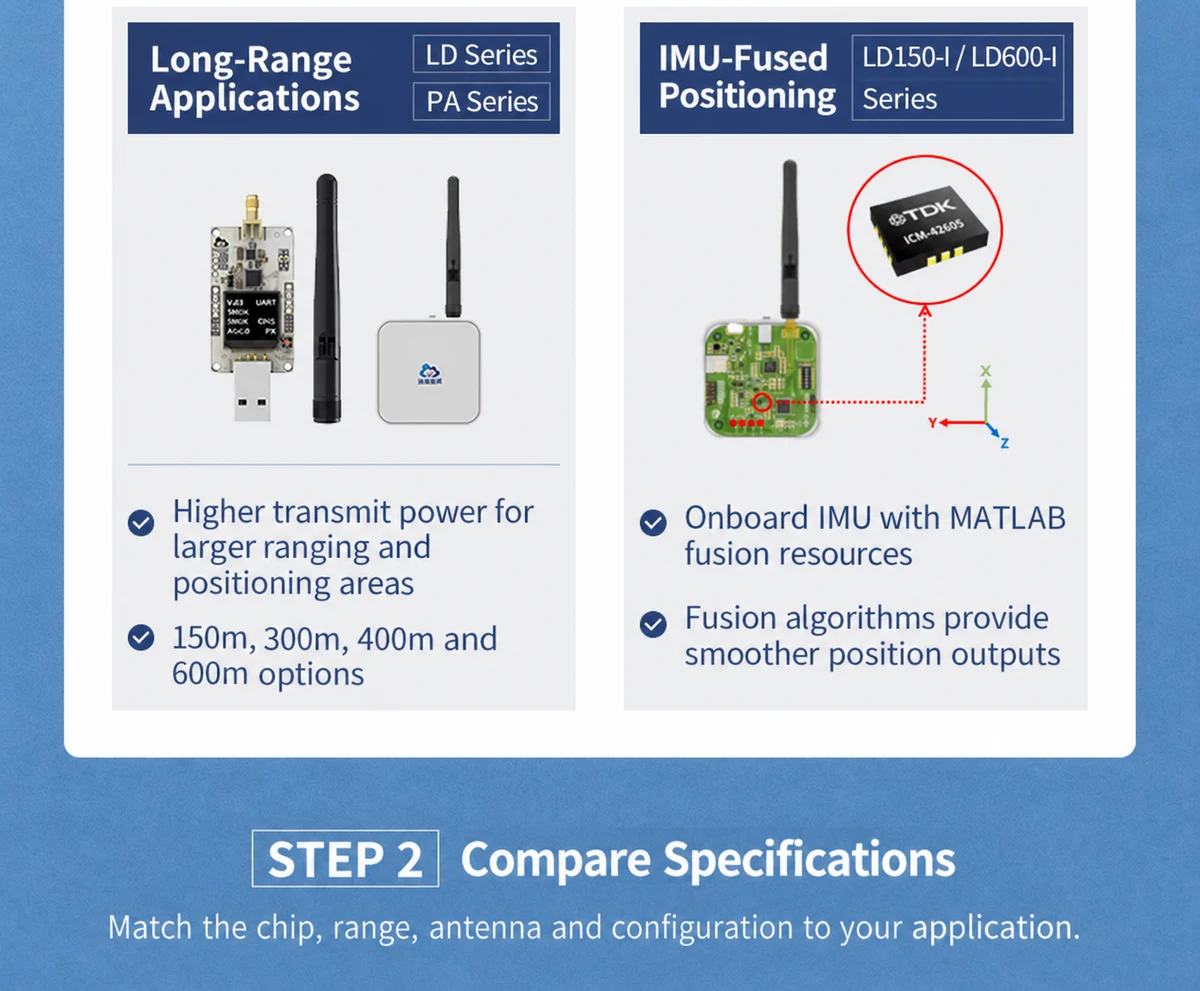
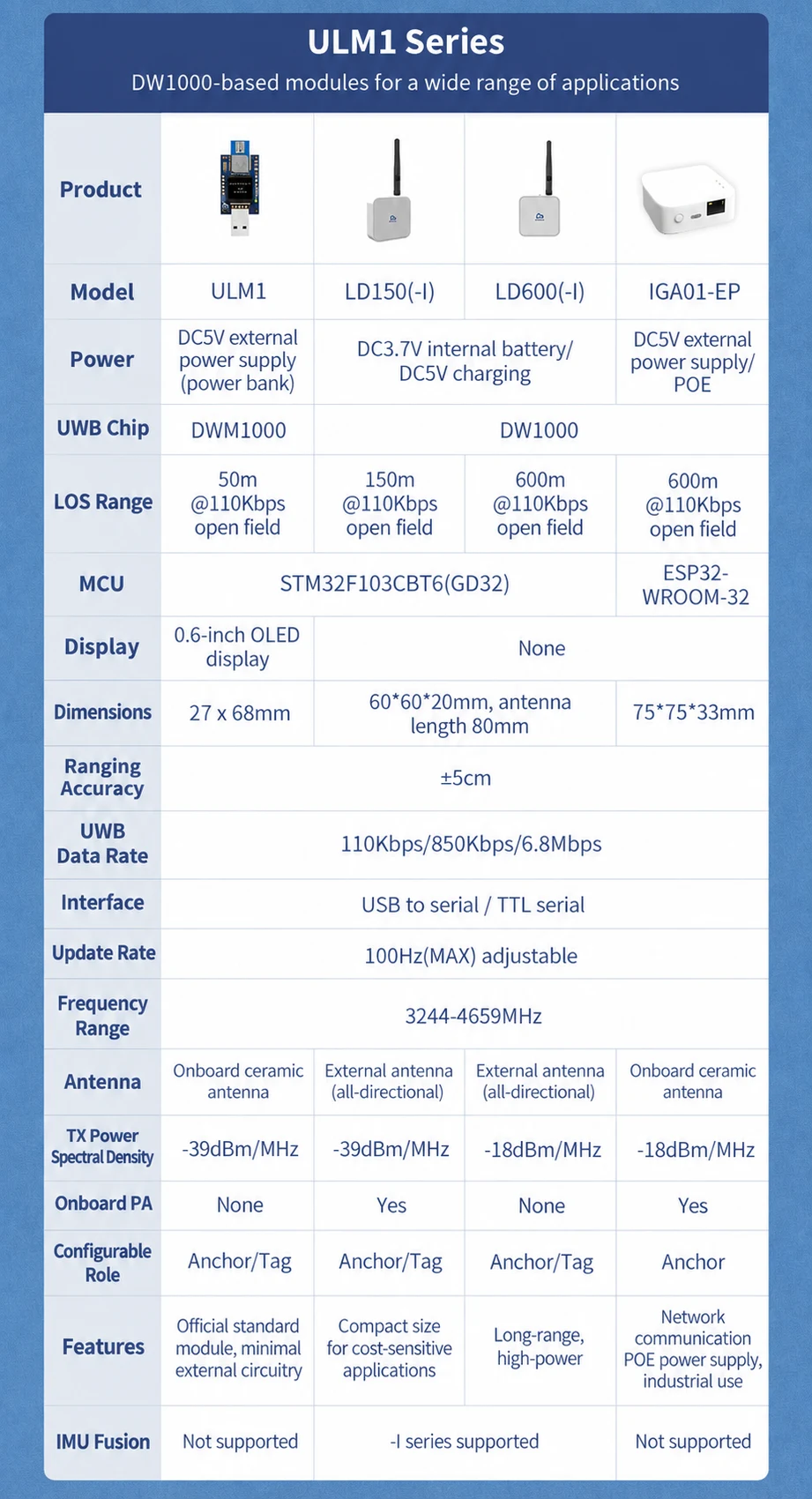
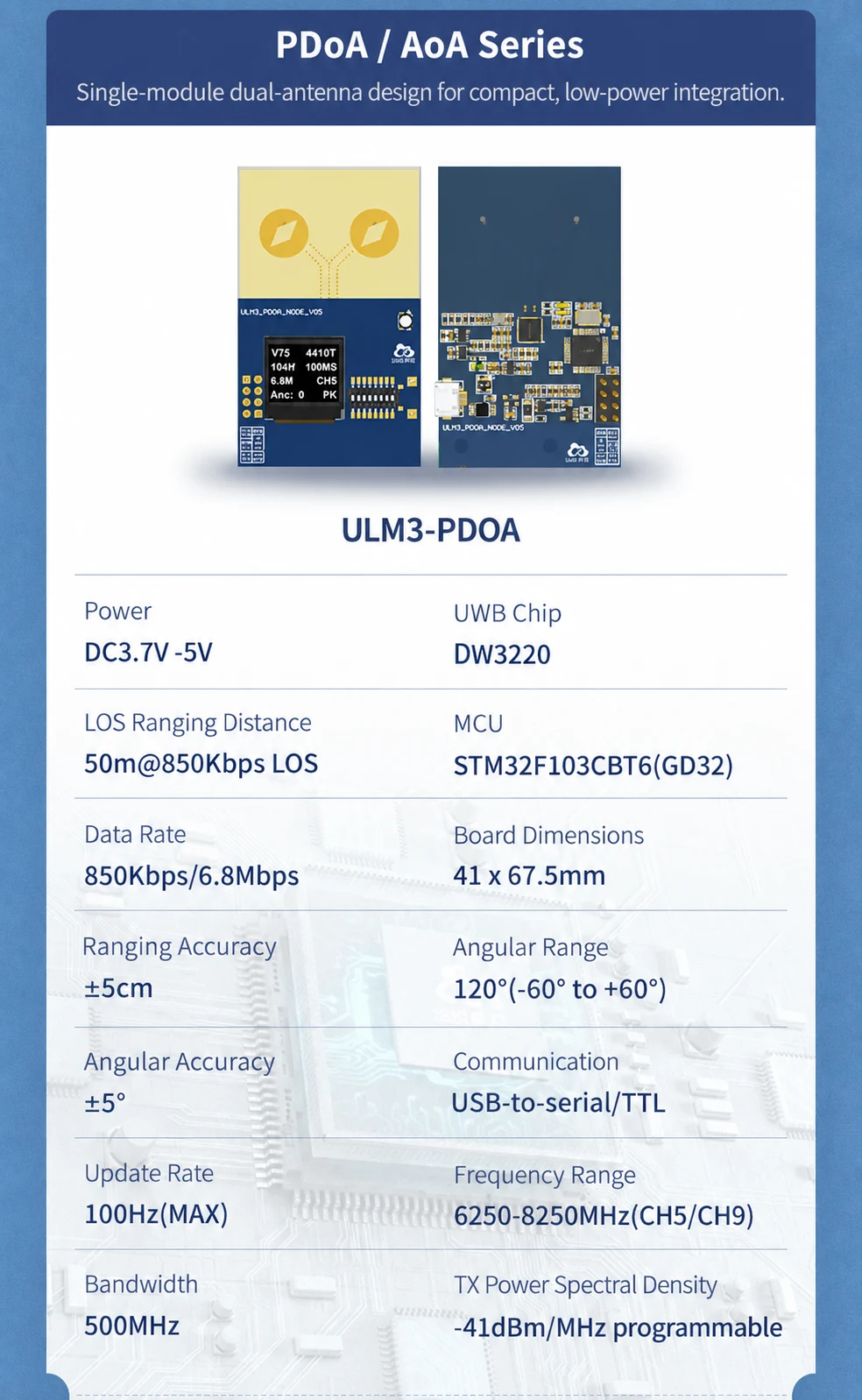
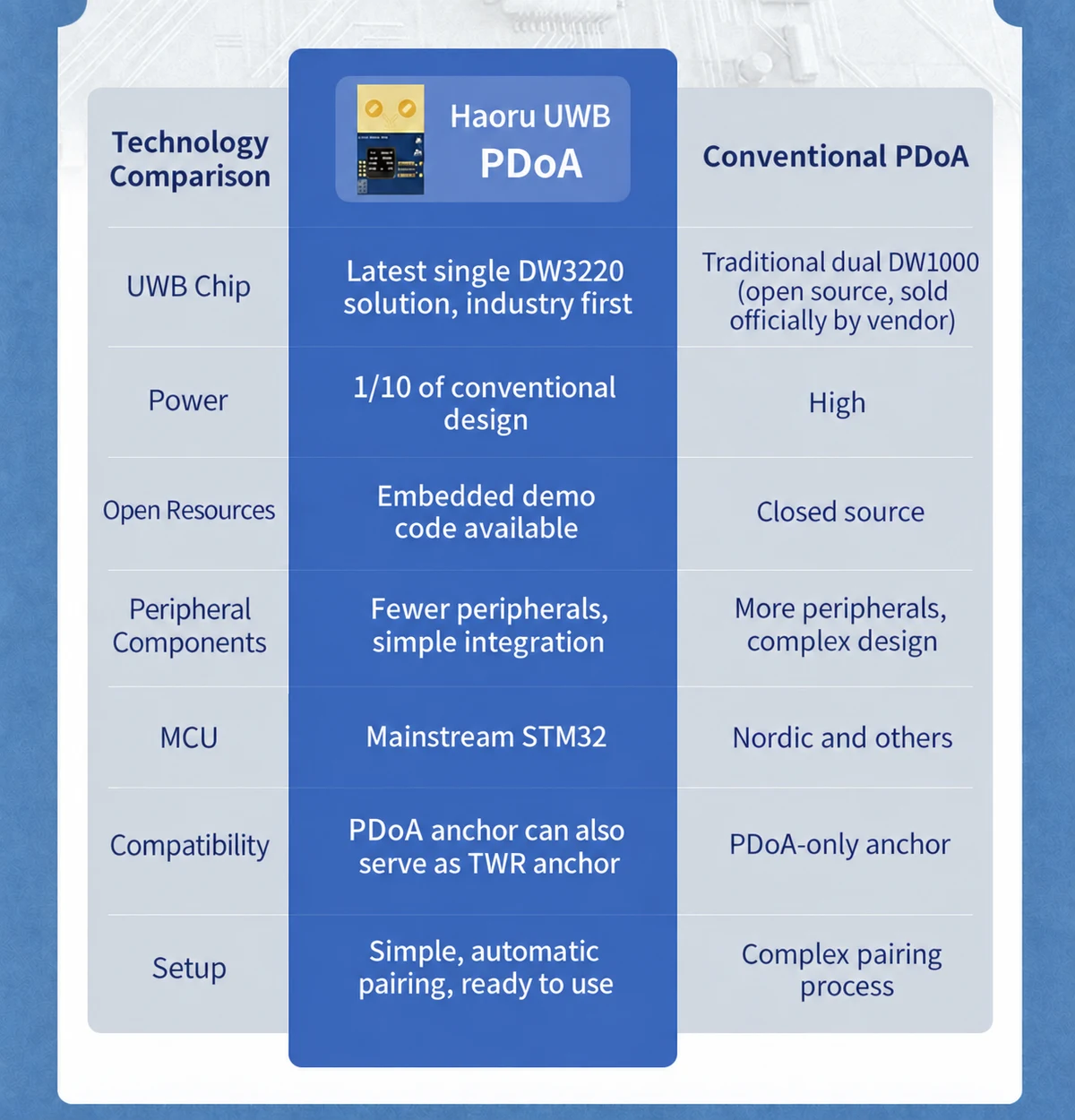
The listed 40 m maximum range is for open line of sight at 850 kbps. Installed performance depends on the tag, environment, geometry and settings. DWM3000 capabilities do not by themselves guarantee interoperability with a phone or another vendor's firmware. For supported range-and-angle measurement, compare the ULM3-PDOA anchor.
English and Chinese manuals are listed below. Use the module selection guide and deployment checks to define your evaluation.
Detail
Product details





Downloads
Related resources
FAQ
FAQ
Can Haoru UWB positioning modules measure angles?
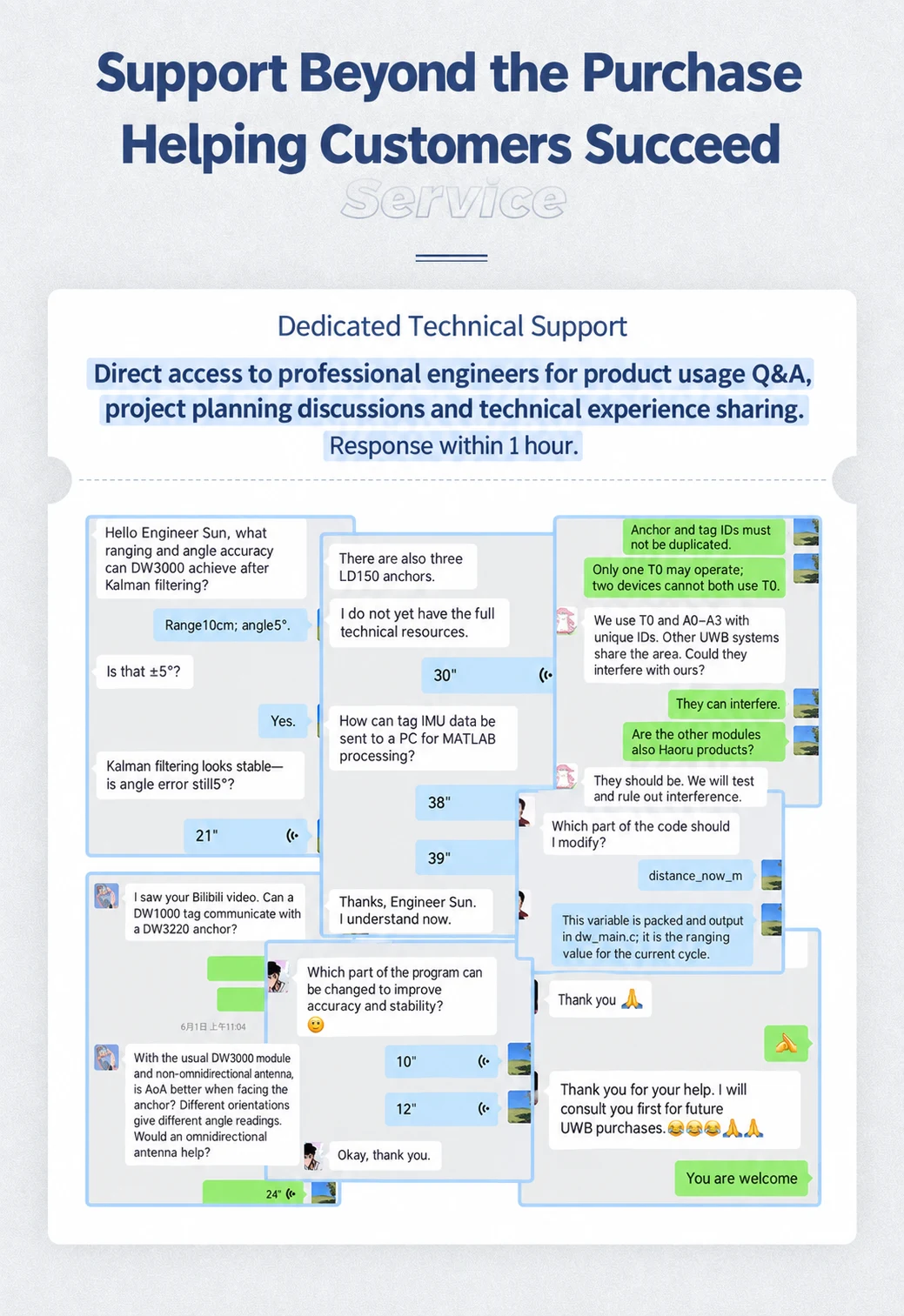
The Haoru ULM3-PDOA anchor measures angles over a ±60° range with ±5° accuracy. Standard tags such as ULM1 and ULM3 measure distance only and do not measure angles.
Do Haoru UWB modules need antenna calibration before use?
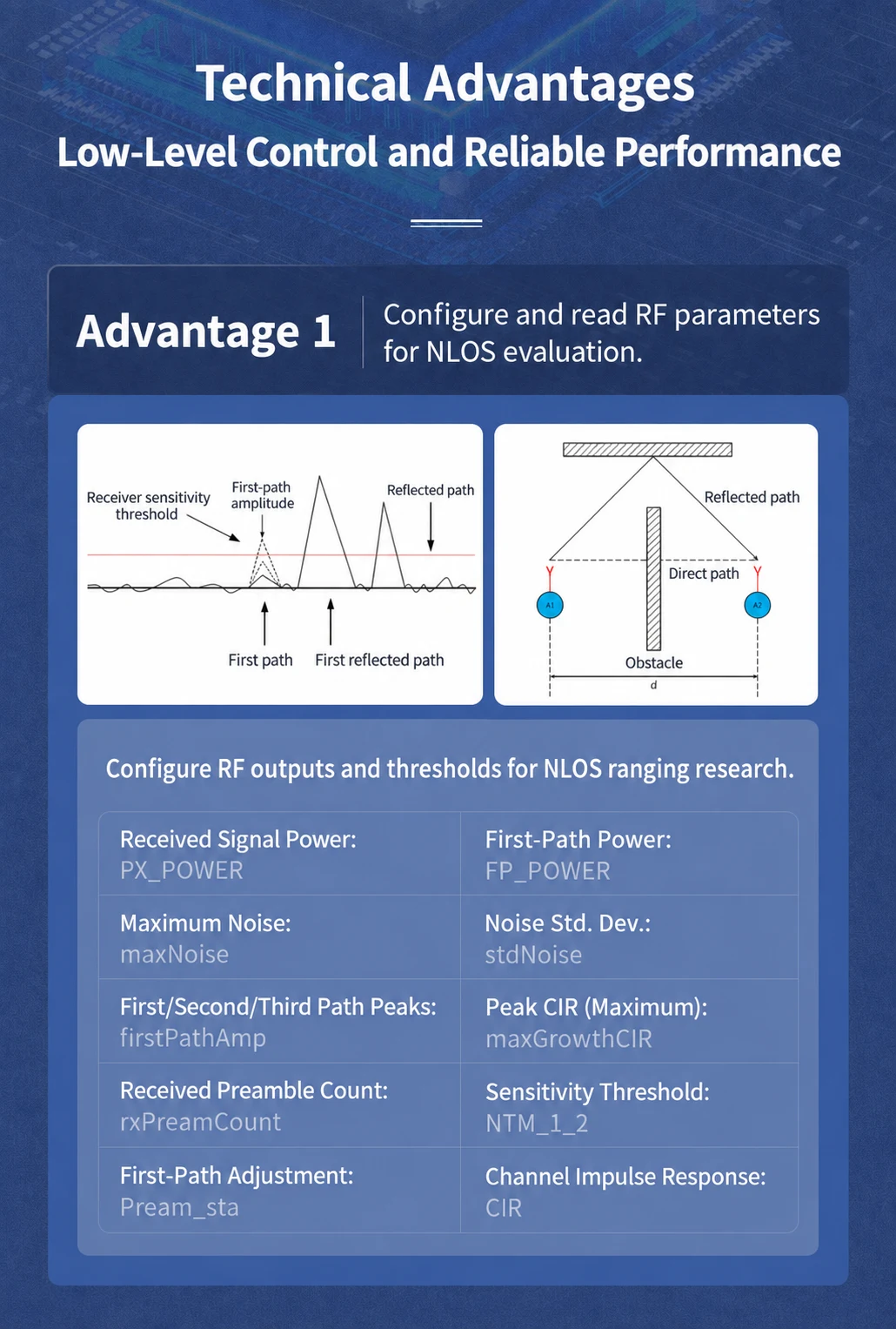
The source describes the modules as ready to use without user calibration. Check the applicable manual for factory calibration and any application-specific antenna-delay calibration requirements.
Is the Haoru UWB positioning system open source?
The source describes the Haoru UWB positioning system as fully open source, including embedded code, PC application code and algorithms. Development manuals and video tutorials are supplied to help customers learn and develop quickly. Confirm the licensing and available files for the specific product and firmware revision.
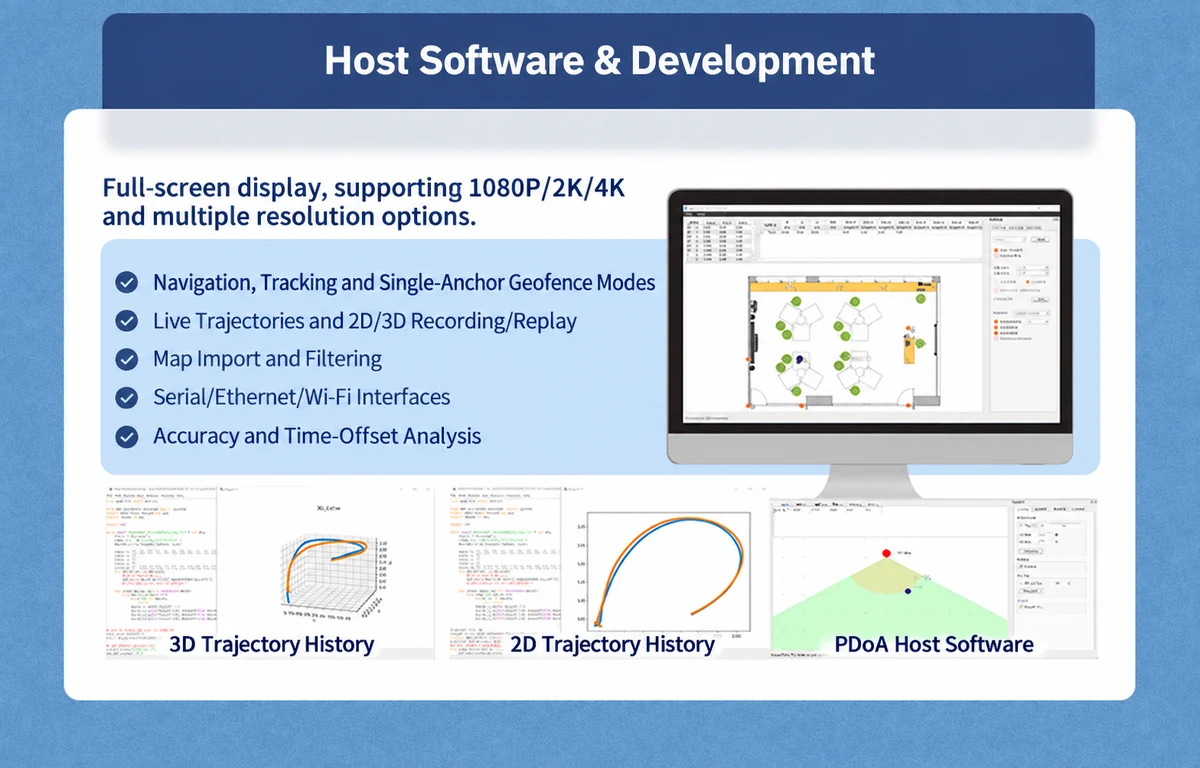
How can I display trajectories from UWB data? Is open-source software available?
The source describes embedded code, PC application code and algorithms as open source, with development manuals and video tutorials. Confirm the supplied software and licensing for the selected product.
Which Haoru products can quickly form a positioning system?
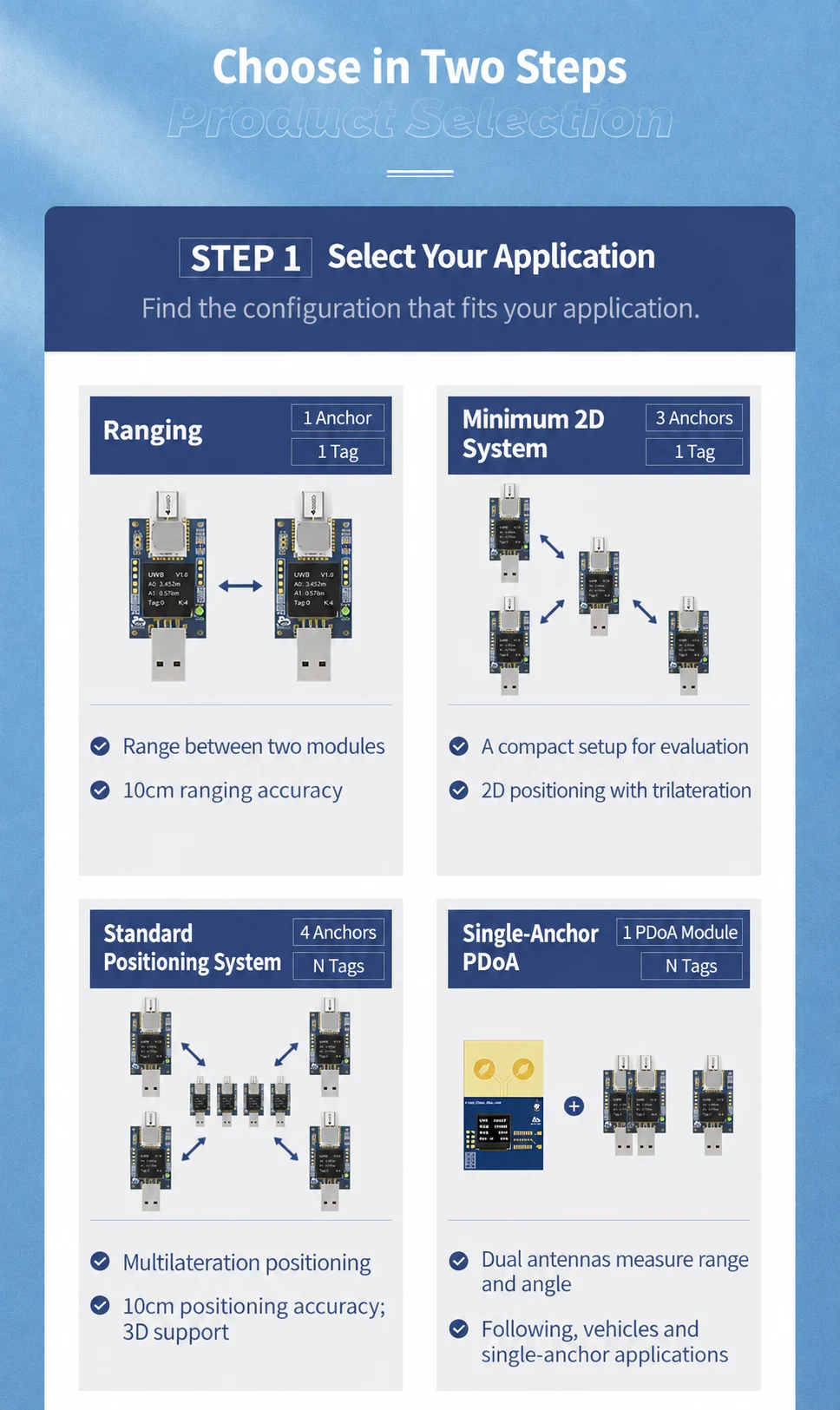
Haoru supplies modules and complete positioning solutions. Choose modules for product integration, or a complete system with anchors, tags and PC software for faster deployment. Select the configuration according to site size and indoor or outdoor use.
Why buy four anchors if three anchors can calculate a position?
1) Tags should operate inside the anchor coverage area. Four anchors can cover a rectangular area rather than a triangular one; the source describes an approximately doubled coverage area. 2) Wireless ranging can fail. With four anchors, a position can still be calculated when ranging to at least three succeeds; a three-anchor setup needs all three measurements to succeed. 3) A four-anchor, one-tag setup can be reconfigured as three anchors and two tags to learn multi-tag operation. 4) Four anchors can support 3D positioning when the installation spans length, width and height in a 1:1:1 arrangement.
PROJECT INQUIRY
Tell Us About Your Project
Share your application, accuracy, distance, quantity or payload requirements. The team responds during working hours, 09:00–18:00 China Standard Time, UTC+8.
Our team will use your contact details to respond to your project inquiry.